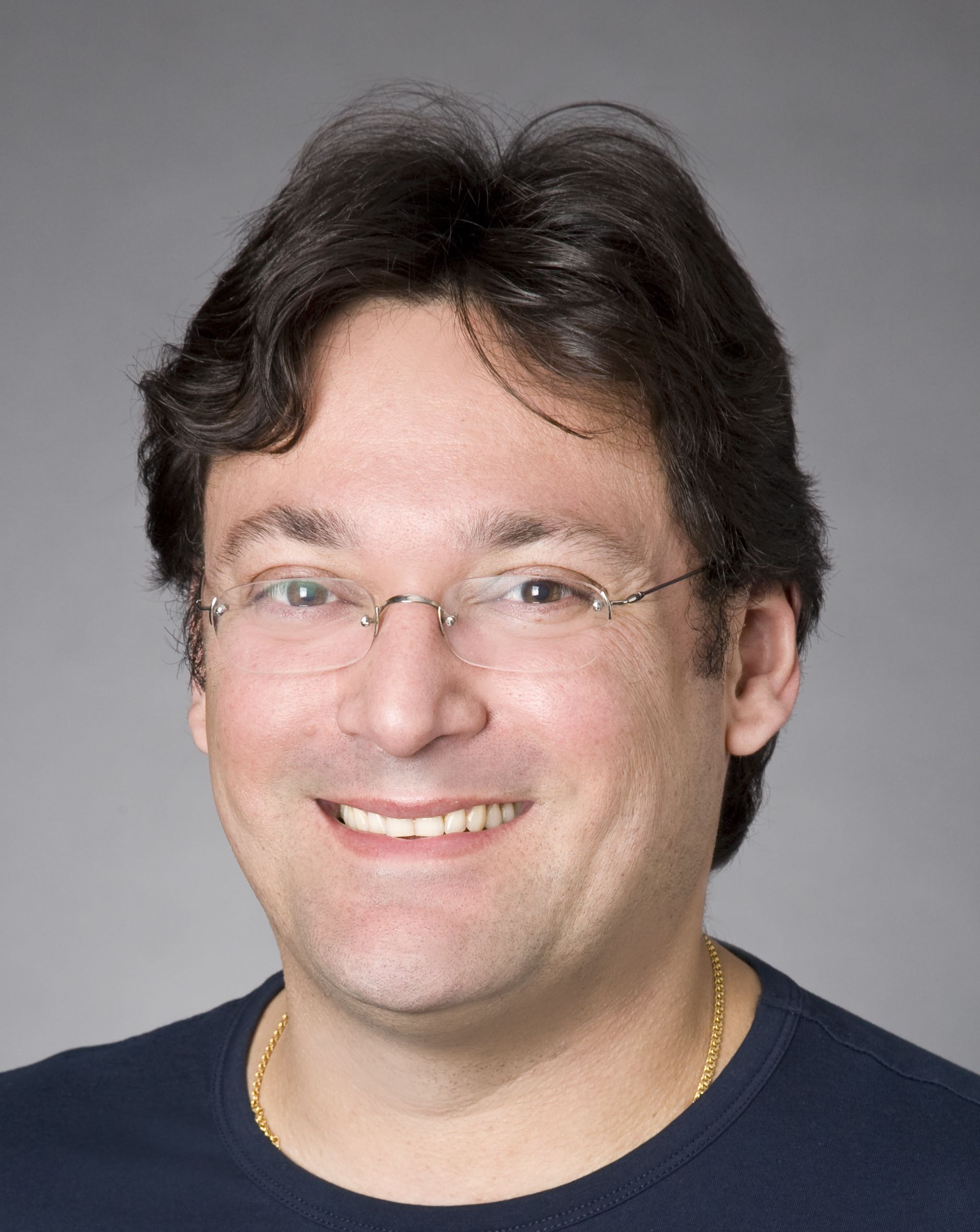
## Welcome to Visualization for Machine Learning! ::: {.columns} ::: {.column width="60%"} ### DS-GA 3001 - **Instructor:** Claudio Silva (csilva@nyu.edu) - **Lecture (.001):** Mondays 4:55 PM - 6:55 PM - **Lab (.002):** Tuesdays 7:10 PM - 8:00 PM - **Location:** 60 Fifth Avenue, Room 150 (both) - **Office Hours:** Fridays 1:30-2:30 PM, 370 Jay Street, Room 1153 ::: ::: {.column width="40%"} ### Teaching Team - **TA:** TBD - **Grader:** TBD - **Discord:** Invite link to be posted ::: :::: ::: {.notes} Welcome everyone to Visualization for Machine Learning! This is our first class, where we'll cover the course syllabus and structure in detail. ::: ## About Me ::: {.columns} ::: {.column width="50%"} ### Claudio Silva - Institute Professor at NYU - Research in visualization, data science, and urban computing - Extensive experience teaching VisML and InfoVis courses ::: ::: {.column width="50%"} ### Contact - **Email:** csilva@nyu.edu - **Website:** [ctsilva.github.io](https://ctsilva.github.io) - **Office Hours:** Fridays 1:30-2:30 PM, 370 Jay Street, Room 1153 ::: :::: ## Course Prerequisites {.smaller} ### Essential Requirements - **Solid programming expertise** at graduate level in CS or Data Science - **JavaScript/D3.js experience** helpful but not required - will be covered in class - **Python programming** - expected for ML components - **Foundation in either** data visualization **or** machine learning ### What We'll Use ::: {.columns} ::: {.column width="50%"} - JavaScript & D3.js - Modern web technologies (HTML, CSS, SVG) - Python & ML libraries (NumPy, Pandas, Scikit-learn) ::: ::: {.column width="50%"} - Git/GitHub for version control - Modern web browser - Text editor/IDE (VS Code recommended) - Node.js for JavaScript development ::: :::: ::: {.callout-warning} If you have no knowledge of machine learning, this course might not be appropriate for you. Please contact the instructor if unsure. ::: ## Course Description ### Visual Analytics for Machine Learning This is a **research-oriented course** on visualization for machine learning, where all students will work on a guided research project. ::: {.columns} ::: {.column width="50%"} #### Visual Analytics Foundation - Improving human analytic processes - Understanding, reasoning, and decision making with data - Combining automated and human-driven processes ::: ::: {.column width="50%"} #### Machine Learning Focus - Rapid growth in ML drives visualization research - Visualization techniques for ML pipelines - Interactive visual analytics for model understanding ::: :::: ### Fast-Changing Field This material is at the cutting edge of computing research, bridging visualization and machine learning communities. ## Course Learning Objectives After this course, you will be able to: 1. **Understand** the role of visualization in the machine learning pipeline 2. **Design** effective visualizations for different types of ML models and data 3. **Implement** interactive visualization systems using D3.js and modern web technologies 4. **Evaluate** ML models through visual analytics 5. **Create** visual explanations for complex ML systems 6. **Critique** existing visualization approaches for ML 7. **Develop** novel visualization techniques for emerging ML challenges ### Overall Goal Make you a more effective data scientist fluent in the connections between visualization and machine learning. ## Course Structure ### Weekly Format: Lecture (Mon, 2h) + Lab (Tue, 50 min) ::: {.columns} ::: {.column width="50%"} #### Monday Lecture - Theory and concepts - Research paper discussions - Live coding demonstrations #### Tuesday Lab - Hands-on programming - Reinforces the previous day's lecture ::: ::: {.column width="50%"} #### Course Arc - **Part 1:** Visualization primer - **Part 2:** Model assessment, white/black-box explainers - **Part 3:** Dimensionality reduction (PCA, t-SNE, UMAP) - **Part 4:** Advanced topics (TDA, deep learning visualization) ::: :::: ::: {.callout-tip} The Tuesday lab meets the day after each lecture, so hands-on work always follows the theory it builds on. ::: ## Reading Material ### No Textbook - Recent Research Focus Most lectures based on **recent technical papers** not yet incorporated into textbooks. ### Expected Preparation - Read corresponding papers **prior to each lecture** - Suggested reading materials provided for each class ### Supplemental References ::: {.columns} ::: {.column width="50%"} 1. **Data Visualization Curriculum** - Jeff Heer [Observable Notebooks](https://observablehq.com/@uwdata/data-visualization-curriculum) 2. **A Course in Machine Learning** - Hal Daumé III [PDF Link](http://ciml.info/dl/v0_99/ciml-v0_99-all.pdf) 3. **Interpretable Machine Learning** - Christoph Molnar [Online Book](https://christophm.github.io/interpretable-ml-book/) ::: ::: {.column width="50%"} 4. **Introduction to Machine Learning** - Etienne Bernard [Wolfram Guide](https://www.wolfram.com/language/introduction-machine-learning/) 5. **Deep Learning** - Goodfellow, Bengio, Courville [Online Version](http://www.deeplearningbook.org/) 6. **Understanding Deep Learning** - Simon J.D. Prince [Online Book](https://udlbook.github.io/udlbook/) ::: :::: ## Research Project ### Substantial Research Component ::: {.columns} ::: {.column width="50%"} #### Project Structure - **Groups of 2-3 students** (or solo with permission) - **Reproduce prior work** or implement novel research idea - **Demonstrate** prior work and your project to class - **No group changes** once finalized ::: ::: {.column width="50%"} #### Timeline - **Week 2:** Team formation - **Week 4:** Project proposal due (4 pages) - **Week 7:** Mid-term update due (1 page) - **Weeks 13-14:** Final presentations - **December 14:** Final report due (8 pages) ::: :::: ### Research Skills Development This project helps develop research skills through hands-on experience with cutting-edge visualization techniques. ## Assessment Overview ### No Midterm or Final Exam! {.text-center} ::: {.columns} ::: {.column width="25%"} ### Assignments **50%** Weekly programming assignments ::: ::: {.column width="25%"} ### Project Proposal **10%** 4-page writeup ::: ::: {.column width="25%"} ### Project Updates **10%** 1-page writeup ::: ::: {.column width="25%"} ### Full Project **25%** 8-page writeup + presentation **Participation: 5%** ::: :::: ## Assignment Details ### Programming Focus Weekly programming assignments for the **first half** of the semester, focusing on implementing visualization techniques for ML. These build the technical skills needed for the final project. ### Late Submission Policy ⏰ | Days Late | Penalty | |-----------|---------| | 1-5 days | 20% per day | | After 5 days | 0 points (maximum grade) | ::: {.callout-important} After 5 days late, your assignment will receive a maximum grade of **zero**. ::: ## Important Policies ### Academic Integrity - Submit your **own original work** - **Cite all sources** and note collaboration - Excessive collaboration beyond discussion is a violation - You must be able to **explain/re-derive** anything you submit [GSAS Statement on Academic Integrity](https://gsas.nyu.edu/about-gsas/policies-and-procedures/gsas-statement-on-academic-integrity.html) ## AI Policy ### We embrace AI as a tool, not a replacement :::: {.columns} ::: {.column width="50%"} #### Allowed Uses ✅ - Learning concepts and debugging - Code suggestions and explanations - Assignment assistance **with disclosure** - Exploring new techniques ::: ::: {.column width="50%"} #### Requirements ⚠️ - **Disclose AI usage** in submissions - **Understand all code** you submit - Be able to **explain your work** - You're **responsible for errors** ::: :::: ::: {.callout-note} AI tools are valuable learning aids, but technical interviews won't have them available. Balance tool use with fundamental understanding. ::: ## Course Schedule (Tentative) - Part 1 ### Fall 2026 Schedule - Weeks 1-7 | Week | Lecture (Mon) | Lab (Tue) | Topic | |------|------|------|-------| | — | Sept 7 | — | **Labor Day** - No Class | | 1 | Sept 14 | Sept 15 | Course Introduction & Visualization Fundamentals | | 2 | Sept 21 | Sept 22 | Perception and Color Theory | | 3 | Sept 28 | Sept 29 | Model Assessment & Evaluation | | 4 | Oct 5 | Oct 6 | White-box Methods & Interpretability | | — | Oct 12 | — | **Fall Break** - No Monday Lecture | | 5 | Oct 14 (Wed) | Oct 13 | **Make-up Lecture** - Black-box Methods & Project Discussion | | 6 | Oct 19 | Oct 20 | Clustering Visualization | | 7 | Oct 26 | Oct 27 | Dimensionality Reduction | ## Course Schedule (Tentative) - Part 2 ### Fall 2026 Schedule - Weeks 8-14 | Week | Lecture (Mon) | Lab (Tue) | Topic | |------|------|------|-------| | 8 | Nov 2 | Nov 3 | Deep Learning Visualization | | 9 | Nov 9 | Nov 10 | NLP and Large Language Model Visualization | | 10 | Nov 16 | Nov 17 | Topological Data Analysis | | 11 | Nov 23 | Nov 24 | Time Series and Streaming Data | | 12 | Nov 30 | Dec 1 | Interpretable ML and Fairness | | 13 | Dec 7 | Dec 8 | Final Project Presentations I | | 14 | Dec 14 | — | Final Project Presentations II | ## Important Dates - **Sept 7:** Labor Day - No Class - **Sept 14 / Sept 15:** First lecture / first lab - **Sept 15:** Add/drop deadline for full-semester classes - **Oct 12:** Fall Break - No Monday Lecture (Tuesday lab still meets Oct 13) - **Oct 14:** Make-up Lecture (Wednesday - University runs a Monday schedule) - **Nov 25:** Deadline to withdraw or request pass/fail - **Nov 26-27:** Thanksgiving Recess - **Dec 8:** Last lab - **Dec 14:** Last lecture / Final Project Reports Due - **Dec 15:** Reading Day - no classes - **No final exam** for this course [NYU Academic Calendar](https://www.nyu.edu/students/student-information-and-resources/registration-records-and-graduation/academic-calendar.html?semester=Fall%202026) ## Accessibility & Support ### Moses Center for Students with Disabilities - Contact: mosescsd@nyu.edu - Phone: 212-998-4980 - Location: 726 Broadway, 3rd floor - Register for accommodations if needed ### Getting Help - **Discord:** Invite link to be posted - Primary communication channel - **Office Hours:** Fridays 1:30-2:30 PM, 370 Jay Street, Room 1153 - **Email:** For private matters only - **Course Website:** [ctsilva.github.io/2026-VisML-CDS/](https://ctsilva.github.io/2026-VisML-CDS/) ## Questions? ### Any questions about the course? - Course structure and objectives - Grading policies and timeline - Prerequisites and technical requirements - Projects and assignments - Schedule and important dates ## End of Course Logistics * Any questions? ## BREAK * 5 minutes ## Self Introduction for VisML 2026 [Google Slides](https://docs.google.com/presentation/d/1WKuZv-KPHqfZW_ta0wb3y3-Lagh8z-fwH_JLgzdeZD8/edit?slide=id.g3652bdfd269_0_0#slide=id.g3652bdfd269_0_0)