## Acknowledgement This presentation is heavily influenced and borrows directly from Prof. Christopher Manning's Stanford cs224n project discussion. ## The Final Project You either: * Do the **default** project (more on this later) * Propose your own final project, which we must approve - For this, you will need a mentor (instructor/TA/postdoc/PhD) You can work in teams of 1-3 people. **Teams are encouraged.** Obviously, more is expected from a team than an individual. ::: {.notes} The final project is a major component of this course, accounting for 25% of your grade. You have two options: follow the structured default project or propose your own custom project. Both paths can lead to excellent outcomes. The key is choosing the option that best fits your experience level, interests, and goals. ::: ## Custom Final Projects * You will need to talk to me or one of the following people about approval for a custom project: - **Parikshit Solunke** (Lead TA) - Sonia Castelo - Fabio Felix Dias - Joao Rulff * **If you intend to do one, please reach out immediately.** ::: {.notes} Custom projects require approval because we need to ensure they're appropriately scoped and relevant to course topics. The approval process helps you avoid common pitfalls like choosing overly ambitious or under-scoped projects. Reach out early - don't wait until the proposal deadline! ::: ## Why Choose the Default Final Project (DFP) * If you have limited experience with research, don't have a clear idea of what you want to do, or need guidance and a goal… **Then do the default final project!** * Considerations: - The final project will give you more guidance, scaffolding, and clear goals to aim at - The path of success is not to do something that looks weak compared to what you could have done with the DFP ::: {.notes} The DFP is not the "easy" option - it's the structured option. It provides a research paper as a starting point, clear evaluation criteria, and well-defined milestones. Many excellent projects come from the DFP because students can focus on execution and innovation rather than spending weeks figuring out what to do. If you're new to ML research or visualization research, this is your best bet. ::: ## Why do Custom Final Project (CFP)? * If you: - Have some research project that you're very excited about, which involves the class topics - You want to try something on your own - You want to see more of the process of defining your own research goal, finding data and tools, etc * Then: - Do the custom project ::: {.notes} CFPs are for students who have a clear research vision and want full creative control. Maybe you're working on something for your PhD, or you have industry data you want to visualize, or you're passionate about a specific ML application. CFPs give you freedom but require more initiative - you'll need to define success criteria, find/create datasets, and justify your approach. ::: ## Gamesmanship * DFP are a more guided option, but it's not that they're less work * DFP are also open-ended projects where you can explore different approaches and your own creativity * There are great DFP and great CFP… and weak DFP and CFP * We will be giving a **Best Project Award** for each type of project (assuming quantity and quality of entries) ::: {.notes} Don't think of DFP vs CFP as "easy vs hard" or "guided vs creative." Both require substantial effort and creativity. We've seen mediocre custom projects that just reimplemented existing work, and brilliant default projects that pushed beyond the paper's original contributions. The Best Project Awards recognize excellence in both categories. Choose based on fit, not perceived difficulty. ::: ## Project Proposal (Due October 13) * Find a relevant (key) research paper for your topic - For DFP, those are provided * Write a summary of that research paper and what you took away from it as key ideas that you hope to use * Write what you plan to work on, and how you can innovate in your final project * Describe as needed, in particular for CFP: - Project plan, relevant existing literature, data that you will use, how you will evaluate your work ::: {.notes} The proposal is due October 13 (one week from today, during Fall Break). This gives you time to think about what you heard today and explore options. This is not just a formality - a good proposal sets you up for success. For DFP students, you're critically reading the provided paper and planning your approach. For CFP students, you're making the case for your project's feasibility and significance. Take this seriously - we provide feedback that will save you pain later. ::: ## Project Proposal: Critical Reading * Skill: How to think critically about a research paper - What were the main novel contributions? - Is the work general and reusable or a special case? - Are there flaws or neat details in what they did? - How does it fit with other papers on similar topics? - Does it provoke good questions on further or different things to try? ::: {.notes} Critical reading is a research skill you'll use throughout your career. Don't just summarize - analyze! Ask: What's actually new here? Could this work on other datasets? What assumptions did they make? What did they not try that would be interesting? Your proposal should demonstrate this critical thinking, showing you understand not just WHAT the paper did but WHY and WHAT'S NEXT. ::: ## Project Proposal: Planning Tips * How to do a good job on your project plan? - You need to have an overall sensible idea - But most project plans are lacking in nuts-and-bolts: * Do you have your data? Can you collect it quickly? * Do you have a realistic evaluation plan? Is it convincing? * Do you have appropriate baselines? ::: {.notes} The biggest mistake in proposals: vague plans. "I will improve the visualization" - how? "I will use a neural network" - which architecture? "I will evaluate on real data" - what data, what metrics? Be concrete. If you don't have data yet, explain exactly how you'll get it and when. If you're not sure about evaluation, propose 2-3 options and ask for feedback. Concrete beats aspirational. ::: ## Project Writeup **Writeup quality is very important to your grade!** 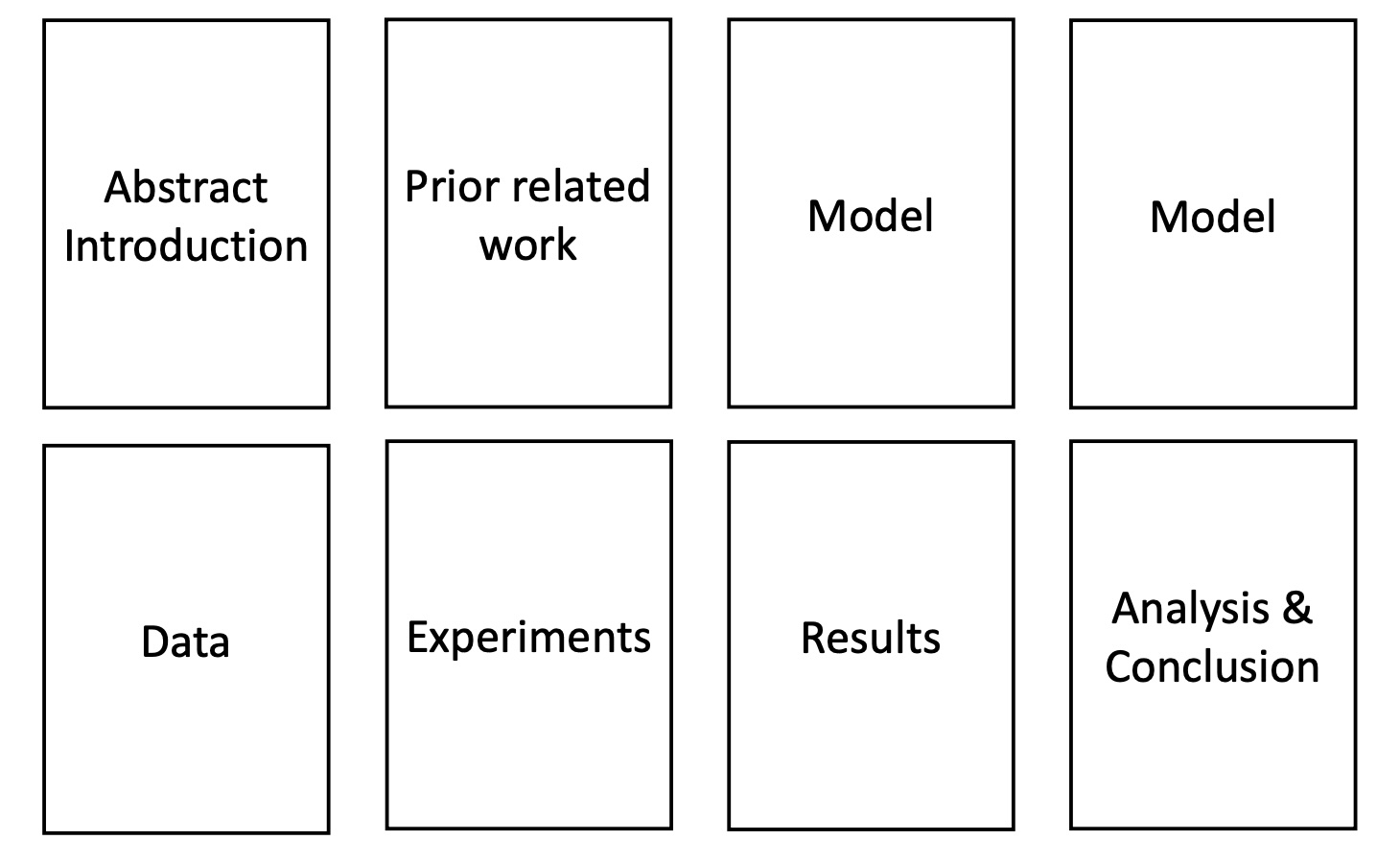 ::: {.notes} Your final report should read like a research paper, not a homework assignment. Follow the standard structure: Introduction (motivation + contributions), Related Work, Methods, Experiments, Results, Discussion, Conclusion. Use figures effectively to communicate ideas. Write clearly and concisely. Proofread! We're grading both technical content and communication - a brilliant project with poor writeup will lose points. ::: ## Sample Project Example 1 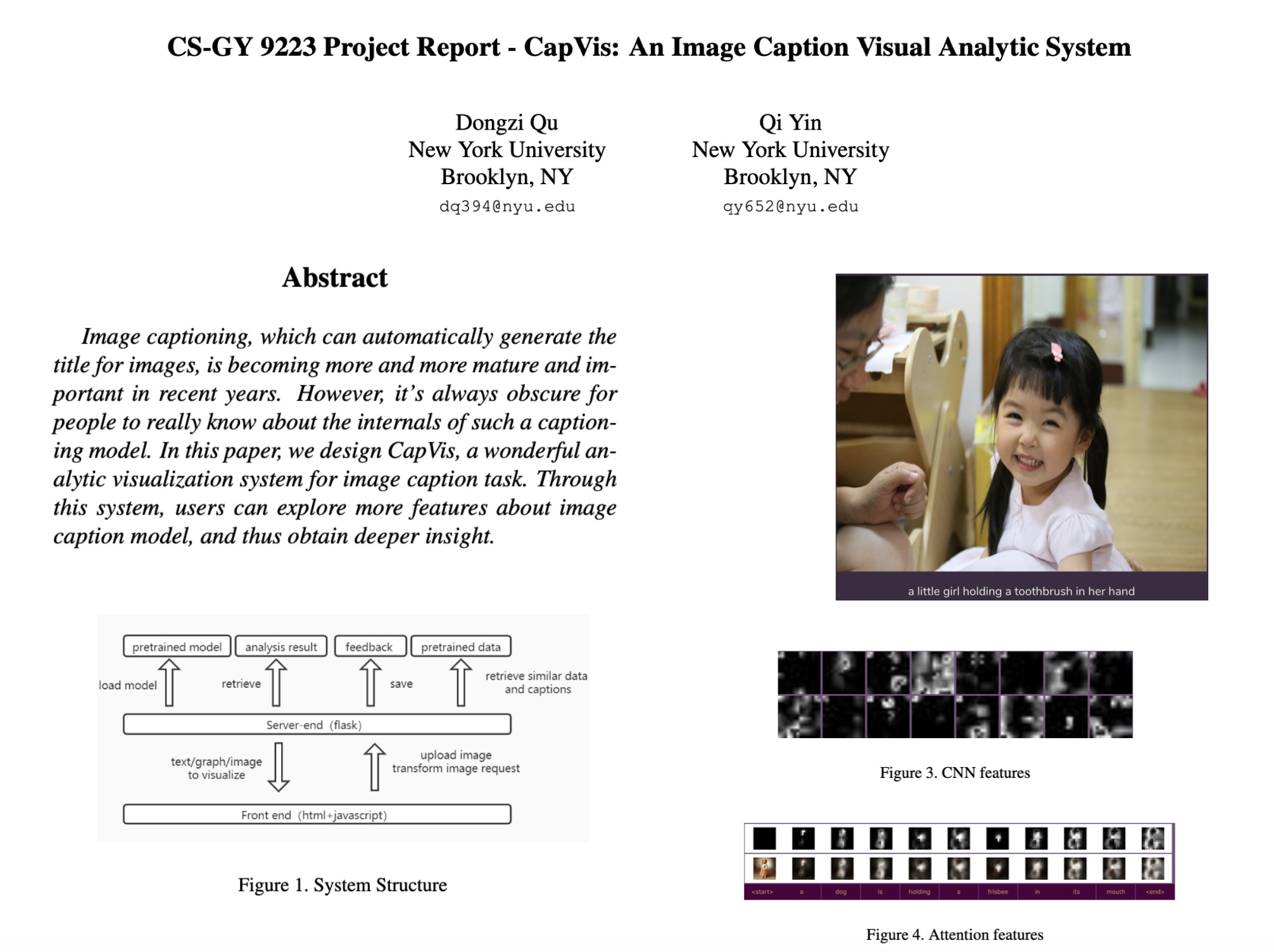 ::: {.notes} This sample shows a typical project scope. Notice how it clearly states the problem, the approach, and the evaluation plan. The visualization makes the contribution immediately clear. Your project should have this level of clarity in both execution and presentation. ::: ## Sample Project Example 2 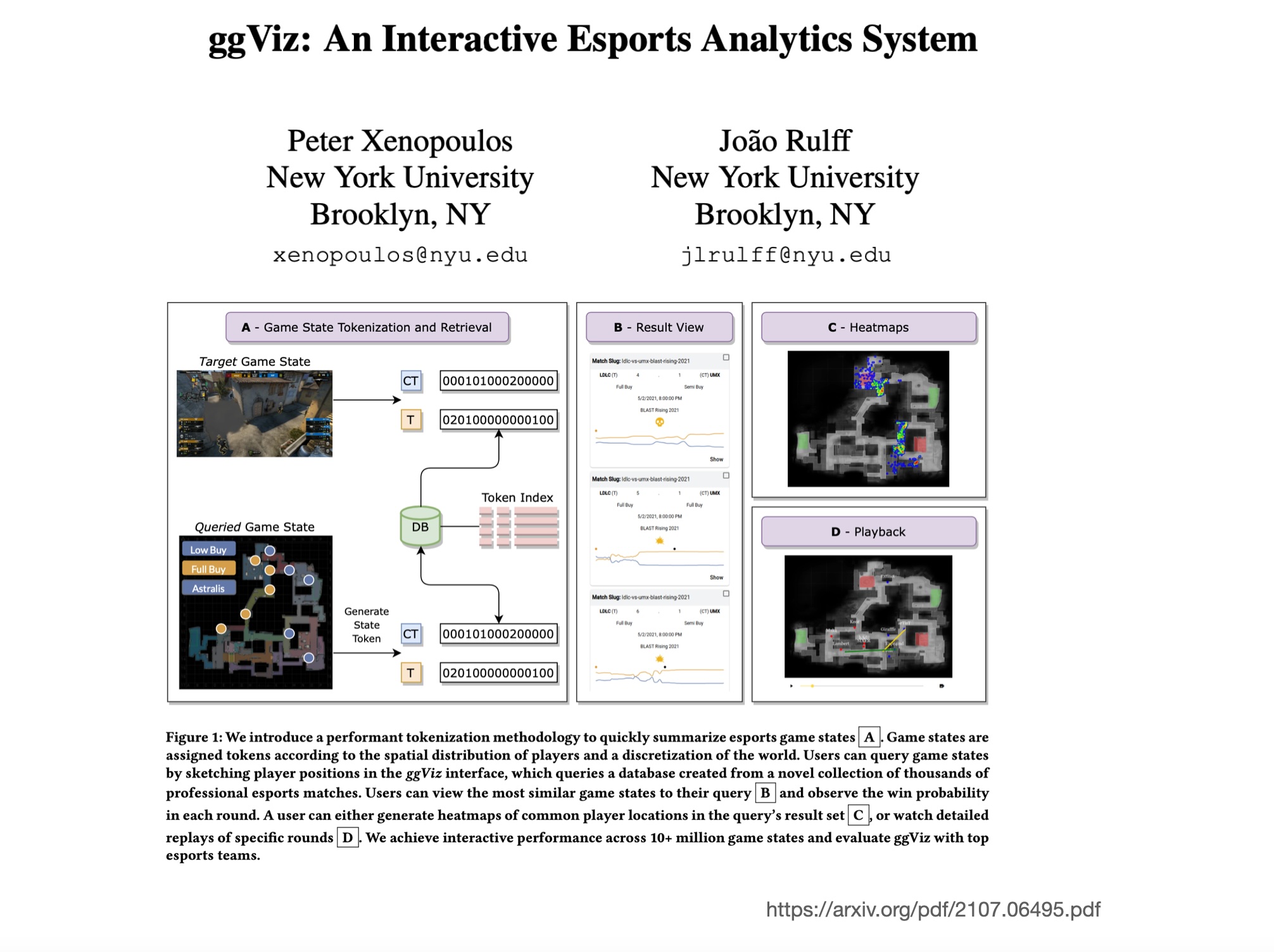 ::: {.notes} Another strong example showing how to present experimental results. Multiple visualizations, clear comparisons, quantitative metrics. This is what we expect in your final report - not just "I built something" but "I built something, here's how it performs, here's how it compares." ::: ## Sample Project Example 3 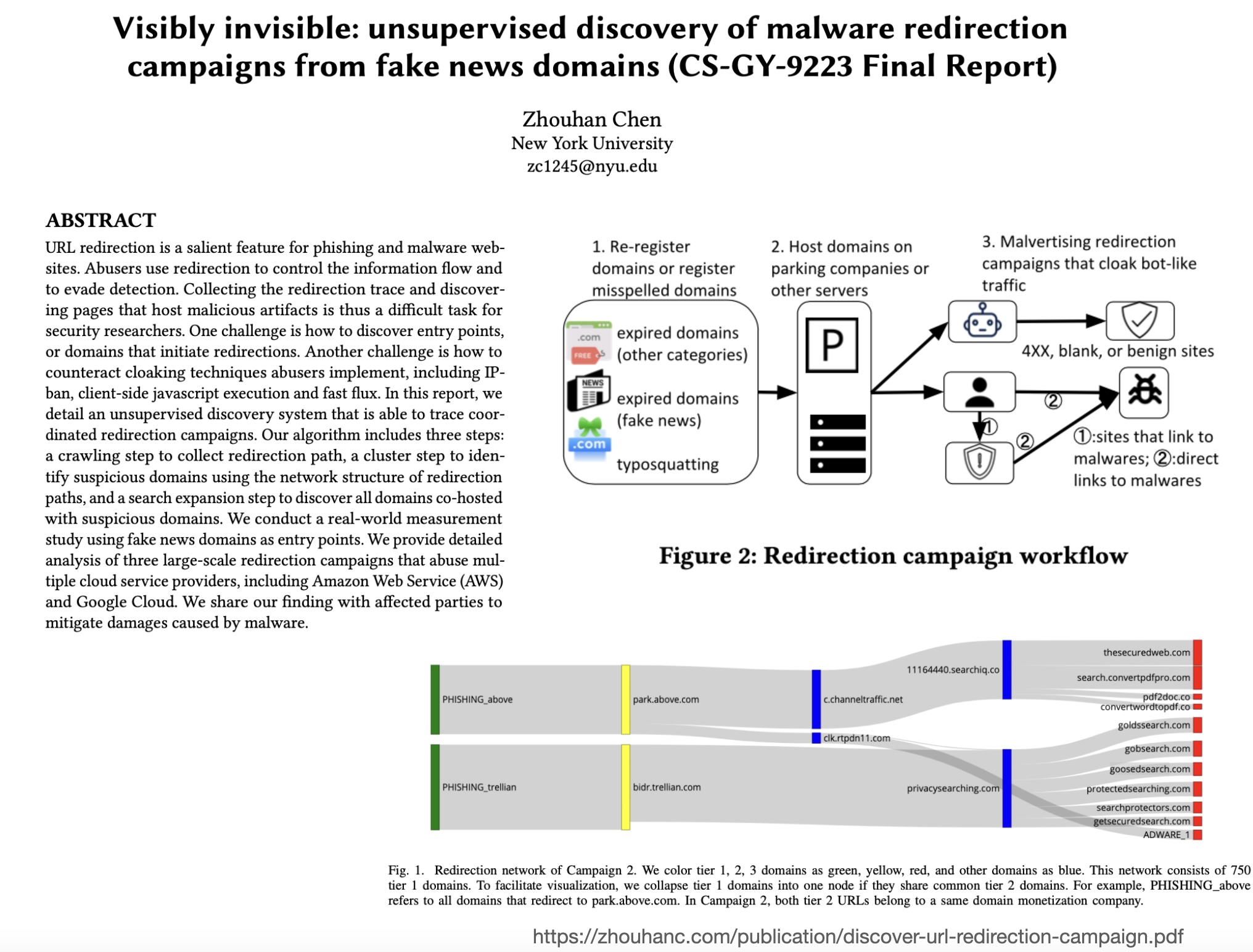 ::: {.notes} This sample demonstrates effective use of visualization to explain complex ML concepts. Notice the progression from simple to complex, the use of color and layout to guide the reader. Your project should leverage visualization not just as output but as a communication tool in your writeup. ::: ## Plan To Use It in Your Portfolio 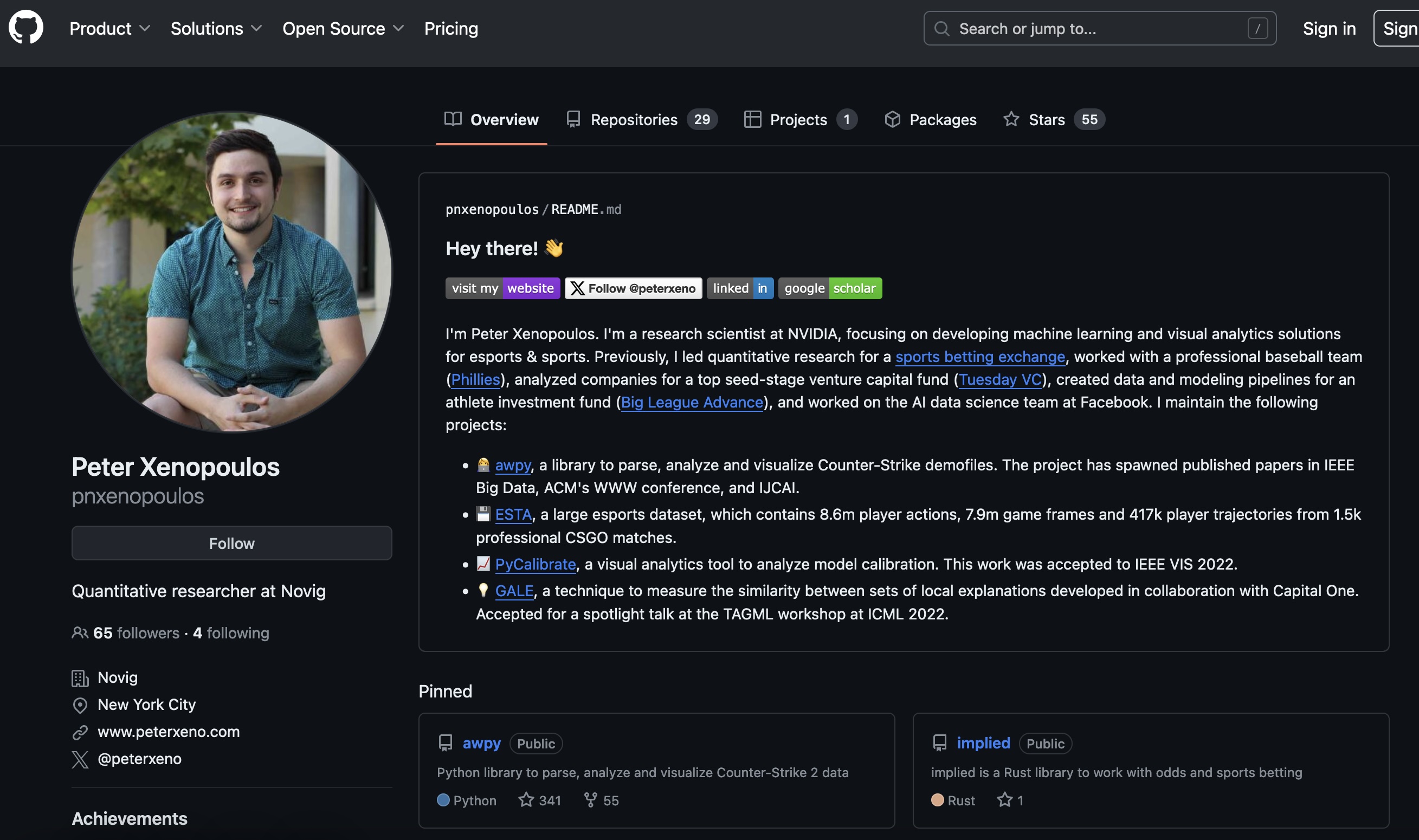 ::: {.notes} Think beyond the grade! This project is a portfolio piece for job interviews, PhD applications, or future research. Make it public (with permission if using private data), put it on GitHub, write a blog post about it. Past students have turned projects into publications, open-source tools, and startup prototypes. Invest the effort to make it something you're proud to show off. ::: ## Plan To Use It in Your Portfolio **Example: From Class Project to Research Impact** * https://github.com/VIDA-NYU/pycalibrate * https://arxiv.org/pdf/2207.13770.pdf This project started as a class visualization project, became an open-source library, and resulted in a published paper. Your project could follow a similar trajectory!
::: {.notes} The pycalibrate example shows what's possible. A student was interested in model calibration visualization, built tools for their project, cleaned up the code, released it open-source, and collaborated with faculty to publish. Your project could be the foundation for your thesis, a startup, or a research publication. Think big, start small, iterate based on feedback. ::: ## Project Timeline | **Milestone** | **Due Date** | **Details** | |---------------|--------------|-------------| | **Proposal** | Oct 13 | 2-3 pages, includes paper summary + plan | | **Mid-term Presentation** | Oct 20 | 5-minute presentation, show progress | | **Final Presentation** | Dec 1 & Dec 8 | 10-minute presentation + Q&A | | **Final Report** | Dec 11 | 6-8 pages (conference paper format) | ::: {.notes} Mark these dates! The proposal is due October 13 (next week, during Fall Break) - one week after today's discussion. Mid-term presentations are in Week 8 - you should have preliminary results by then, not just plans. Final presentations span two weeks - we'll split the class. The final report is due December 11, giving you time after presentations to incorporate feedback. ::: ## Evaluation Criteria :::: {.columns} ::: {.column width="50%"} **Technical Quality (60%)** - Soundness of approach - Appropriate evaluation - Depth of analysis - Innovation beyond baseline **Presentation (15%)** - Clarity of slides - Quality of demo/visualizations - Handling of Q&A ::: ::: {.column width="50%"} **Writeup (20%)** - Clear motivation and contributions - Proper related work - Effective visualizations - Insightful discussion **Teamwork (5%)** - Equal contribution (for teams) - Clear division of labor - Collaboration evidence ::: :::: ::: {.notes} Technical quality is the majority of your grade, but communication matters! A technically strong project with poor presentation/writeup will score lower than a slightly less ambitious project that's beautifully communicated. For teams, we may assign individual grades if contribution is unequal - document who did what in your report. ::: ## Default Project Topics **Will be announced on Discord this week!** Potential themes: - Model interpretability visualization - High-dimensional data exploration - Interactive ML debugging tools - Fairness and bias visualization - Time-series model visualization - Embedding space exploration Each DFP topic will include a reference paper, dataset suggestions, and baseline approaches.
::: {.notes} We're finalizing the default project topics and will post them on Discord soon. Each topic will have a reference paper (usually from a top venue like IEEE VIS, CHI, or NeurIPS), suggestions for datasets, and ideas for baselines. You'll have freedom to innovate within the topic - extend the approach, apply to new data, improve the visualization, add interactivity, etc. ::: ## Getting Help **Office Hours:** - Instructor office hours: Fridays 1:30-2:30 PM (Room 1153, 370 Jay St) - TA office hours: Posted on Discord **Resources:** - Discord #project-discussion channel - Weekly check-ins during lab sessions - Mid-term presentation feedback **Don't wait until the last minute!** ::: {.notes} Use office hours strategically! Come with specific questions: "I'm stuck on this evaluation metric" beats "How's my project going?" We'll dedicate lab time throughout the semester for project check-ins. Use Discord for quick questions. The mid-term presentation is your chance to get feedback before it's too late to pivot. We want you to succeed - ask for help early and often. ::: ## Tips for Success 1. **Start Early** - Don't wait until after Thanksgiving! 2. **Iterate** - Build simple version first, then improve 3. **Visualize Often** - Make plots to understand your data/results 4. **Document** - Keep notes, screenshots for your writeup 5. **Test on Real Users** - Get feedback on your visualizations 6. **Version Control** - Use Git, commit frequently 7. **Communicate** - Keep your team and mentors updated ::: {.notes} These tips come from watching students succeed (and struggle) over the years. The most common failure mode: starting too late. The most common success factor: iterative development with frequent feedback. Visualization is your friend - if you can't visualize your intermediate results, you don't understand them yet. Document as you go - future you will thank present you when writing the report at 2am. ::: ## Questions? **Discord:** #project-discussion **Email:** Claudio Silva (csilva@nyu.edu) **Office Hours:** Fridays 1:30-2:30 PM (Room 1153, 370 Jay St)
::: {.notes} This is the time to ask clarifying questions about project scope, team formation, timeline, evaluation criteria, etc. After this lecture, start thinking about whether you want to do default or custom, and if custom, schedule a meeting with the instructors or TAs. The proposal deadline is October 13 - that's one week from today. Use this week wisely! :::